Affiliate Disclosure: As an Amazon Associate, NAWA earns from qualifying purchases. We may earn a small commission if you click a link and make a purchase — at no extra cost to you.
Wrestling shoe laces seem like a minor detail until yours snap mid-practice or come untied during a match. The laces are the only thing keeping your shoe secured to your foot — and a shoe that is not secured correctly is a shoe that is not doing its job. Understanding how wrestling shoe laces work, when to replace them, and how to get the most out of them is a small investment of knowledge that pays off every time you step on the mat.
How Wrestling Shoe Laces Differ From Regular Shoe Laces
Wrestling shoe laces are longer and thinner than standard athletic shoe laces. Most wrestling shoes have more eyelets than regular sneakers — extending higher up the ankle — which requires extra lace length to reach the top and still leave enough to tie a secure double knot.
The thinner profile of wrestling laces is intentional. Thicker laces create bulk at the knot that can press against the ankle during wrestling, causing discomfort and distraction. Thin laces tie flat and stay out of the way. They are also lighter, which matters marginally at the competitive level where every ounce is considered.
How Long Should Wrestling Shoe Laces Be?
Wrestling shoe lace length depends on the height of the shoe and the number of eyelets. Most wrestling shoes require laces between 45 and 60 inches long.
| Shoe Height | Number of Eyelets | Recommended Lace Length |
|---|---|---|
| Low-top | 4–6 pairs | 45 inches |
| Mid-top | 6–8 pairs | 54 inches |
| High-top | 8–10 pairs | 60 inches |
When in doubt, measure the original laces before replacing them. Remove one lace completely, measure it from tip to tip, and order the same length.
When to Replace Wrestling Shoe Laces
Wrestling shoe laces need replacing when they show any of these signs:
Fraying at the tips. The aglet — the plastic or metal tip at the end of the lace — protects the lace from fraying. When the aglet breaks off or the lace frays beyond the aglet, threading the lace through eyelets becomes difficult and the frayed end catches and weakens further. Replace immediately.
Thinning or weakening along the length. Wrestling laces experience significant tension during every practice. Over time, the fabric weakens at points of repeated stress — particularly at the top eyelet where the most tension is concentrated during tying. A lace that looks thin or feels less robust than when new is a lace that is about to snap. Do not wait for it to break during a match.
Loss of grip. New laces have a slight texture that helps knots grip and hold their position. Worn laces become slick with use and washing, causing knots — even double knots — to work loose more easily during wrestling. If your laces keep coming untied despite correct double knotting, worn laces are likely the culprit.
Snapping. If a lace snaps during practice, replace both laces — not just the broken one. If one lace has worn to the point of snapping, the other is likely at a similar point of weakness.
Best Replacement Wrestling Shoe Laces
Replacement wrestling shoe laces are inexpensive and worth keeping a spare pair in your gear bag. The right replacement lace is thin enough to thread easily through wrestling shoe eyelets, long enough to reach the top eyelet with enough left to tie a double knot, and durable enough to handle a full season of regular use.
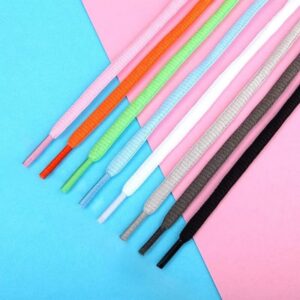
🛒 Check Wrestling Shoe Laces on Amazon
When ordering replacement laces, match the length to your shoe height using the table above. Most wrestling-specific replacement laces are available in 45, 54, and 60 inch lengths to cover the range of wrestling shoe heights.
Can I Use Regular Shoe Laces in Wrestling Shoes?
You can, but there are trade-offs. Standard athletic shoe laces are typically thicker than wrestling-specific laces, which creates more bulk at the knot and can press against the ankle during wrestling. They are also often shorter than wrestling shoes require — a 45-inch running shoe lace will not reach the top eyelets of a high-top wrestling shoe.
In an emergency — a lace snaps before practice and you have nothing else — a regular shoe lace in the correct length is functional. For regular use, wrestling-specific laces are worth the small additional cost.
How to Lace Wrestling Shoes Correctly
Correct lacing is as important as lace quality. A correctly laced wrestling shoe stays secure through a full practice. An incorrectly laced shoe shifts, loosens, and eventually comes untied at the worst possible moment.
Start at the bottom eyelet and work upward, crossing the laces at each eyelet with consistent tension. Increase tension slightly as you move into the upper eyelets around the ankle — this is where security matters most. At the top, tie a standard overhand knot as tightly as possible before forming your bow, then loop through twice for a double knot. Tuck the loops and loose ends under the laces on top of the shoe.
Our complete guide on how to tie wrestling shoes covers every technique in detail — including the heel lock lacing method for wrestlers with narrow heels or heel slippage issues, and the Wrestler’s Knot for a more secure bow than the standard double knot.
Should I Tape Over My Laces?
Some wrestlers tape over their laces with athletic tape before competition as an extra precaution against coming untied. This is legal in most wrestling federations and adds a final layer of security. If you choose to tape, use a single wrap of 1.5-inch athletic tape over the knot and bow only — not over the entire lacing system, which restricts the shoe’s flex.
Taping is a personal preference rather than a necessity for most wrestlers. A correctly tied double knot with laces in good condition should hold through a full match without tape. Tape is most useful for wrestlers who compete in long tournaments and want extra security across multiple matches.
Frequently Asked Questions
Why do my wrestling shoe laces keep coming untied?
The most common causes are a loose base knot, worn laces that have lost their grip texture, or laces that are too long and create excess bow that catches during wrestling. Tighten the base overhand knot as firmly as possible before forming the bow, double knot every time, and tuck the ends securely. If the problem persists after correct knotting, replace the laces — worn laces are slick and will not hold a knot regardless of technique.
How often should I replace wrestling shoe laces?
Replace when you see fraying, thinning, or loss of grip — or immediately after a snap. For wrestlers who train five days per week, laces typically last one full season. For lighter training loads, laces may last longer. Check them at the start of each season and replace if they show any signs of wear.
What color laces should I use?
Match the original lace color for a clean look, or use white laces as a universal replacement that works with any shoe color. There are no competition rules about lace color in most federations — personal preference applies.
My wrestling shoes came with laces that are too long. What should I do?
Do not cut wrestling shoe laces — cutting creates a frayed end without an aglet that will unravel quickly. Instead, use the extra length to wrap once around the ankle before tying your knot at the top. This uses the extra length productively, adds a layer of ankle security, and eliminates the excess that causes loose loops to catch during wrestling.
Related Guides
For a complete guide to tying wrestling shoes correctly, see our how to tie wrestling shoes guide. For breaking in new shoes, our how to break in wrestling shoes guide covers the process step by step. And for choosing the right wrestling shoes in the first place, our best wrestling shoes for beginners guide and complete wrestling shoe buying guide have everything you need.
EXCLUSIVE DEALS
🔥 Never Pay Full Price Again
Join Price Error — our free Facebook group where we share price mistakes, lightning deals, and exclusive discount codes on Amazon every day.
Already saving money every week. Join 100% free, leave anytime.
Prices and availability are accurate as of publication and subject to change. As an Amazon Associate, NAWA earns from qualifying purchases.